
The Authorities and the Wanderers
The Man Who LaughsA series of laws and local powers turn itinerant life into suspicion, revealing the distance between legal order and human safety.
increasing Bearing strength in each event
 decreasing
Bearing strength in each eventdecreasingA Trade That Can Be Used
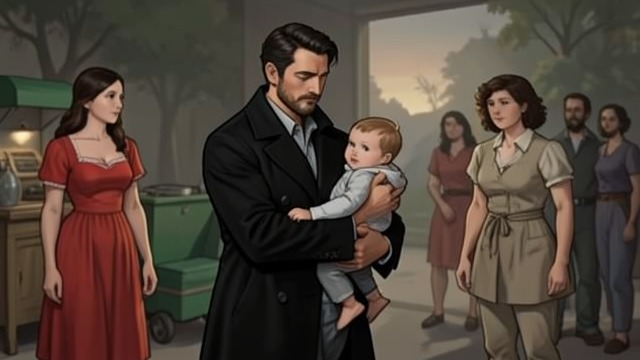
A Trade That Can Be Used
Toleration for convenience
The Comprachicos serve royal and court interests despite public horror.
Their usefulness protects them from consistent prosecution.
The law’s treatment of them follows political need.
A child in the machinery
Gwynplaine’s sale demonstrates the human cost of that arrangement.
Royal power and criminal trade cooperate in secret.
The child has no protection from the authorities meant to govern him.
A New Campaign
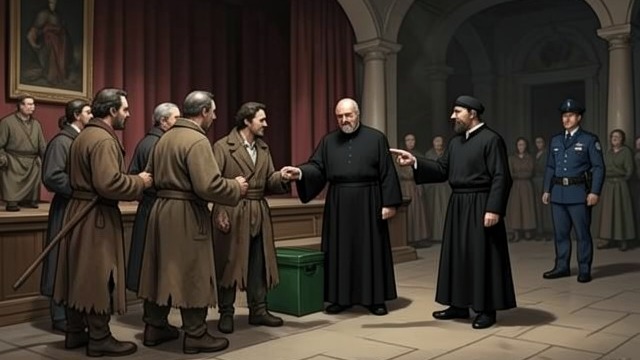
A New Campaign
The network pursued
William III’s government moves against the Comprachicos.
The decree threatens branding, confiscation, and imprisonment.
A previously useful trade becomes a target of state enforcement.
Fear spreads wider
Poor wanderers fear being mistaken for child buyers.
Some abandon children rather than risk arrest.
Legal repression expands suffering beyond the intended criminals.
The Circus Complaints
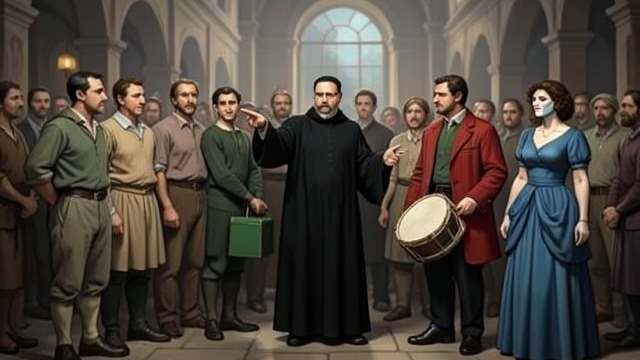
The Circus Complaints
Local interests align
Rival performers lose audiences to Gwynplaine.
Religious leaders resent the crowd’s attraction to the show.
Different groups turn their complaints toward official action.
Law finds a pretext
Homo’s outlaw status offers a concrete case against the troupe.
The authorities need not address the rivals’ true motives.
A marginal family becomes vulnerable under overlapping rules.
Arrest Without Notice
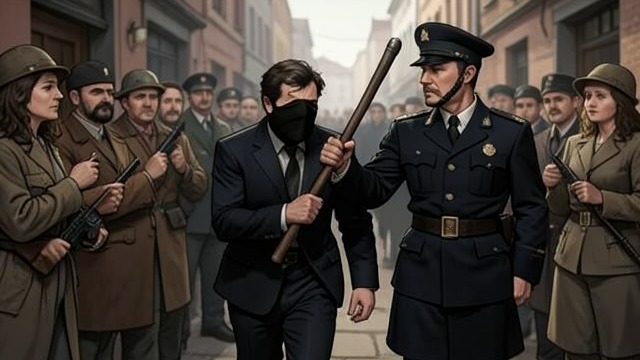
Arrest Without Notice
Command replaces explanation
The wapentake touches Gwynplaine with the iron weapon.
The legal order requires obedience without immediate information.
The silent arrest isolates the target from his companions.
The household intimidated
Ursus follows at a distance, fearing both for Gwynplaine and himself.
Dea is kept unaware to protect her from shock.
Law functions as intimidation before guilt has been established.
Collective Expulsion
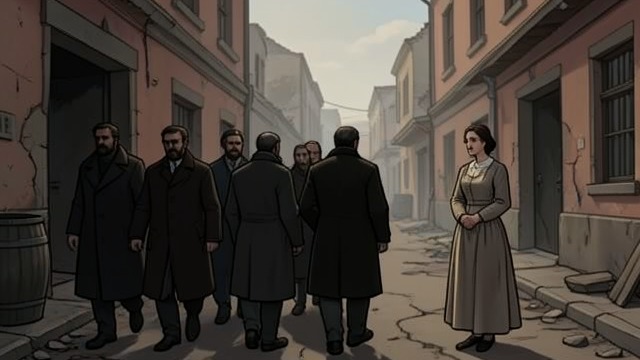
Collective Expulsion
The wolf becomes a charge
The justice orders Ursus and Homo to leave England.
The order threatens Homo with death if he remains.
A harmless companion is made the instrument of wider suppression.
The community destroyed
The Green Box, horses, and performers must be sold or dispersed.
The innkeeper is arrested and the inn closed as an example.
Public order is enforced by destroying a vulnerable community.
During the Stuart period in the seventeenth century
After the accession of William III in 1688
During the Green Box’s early London success
At breakfast on the day Gwynplaine is taken
The morning after Ursus believes Gwynplaine has died
